projects
A. Shaping Light
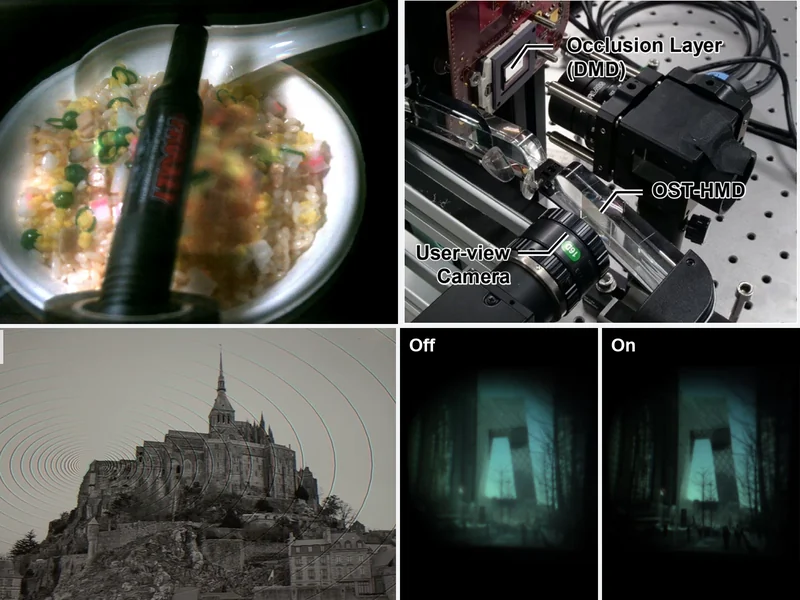
We shape light to bring imagined scenes into view, exploring new ways for the real and the imagined to meet.
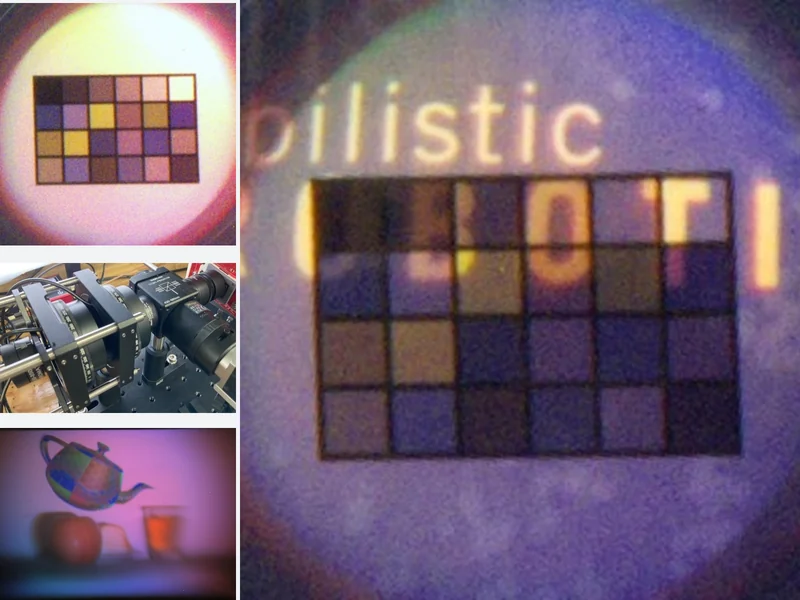
Light Attenuation / Multi-spectral Displays
We design see-through displays that create images and colors by controlling the intensity and spectrum of incoming light. Combining optical design with computational methods, we explore how environmental light can serve as a medium for visual expression.
3 related publications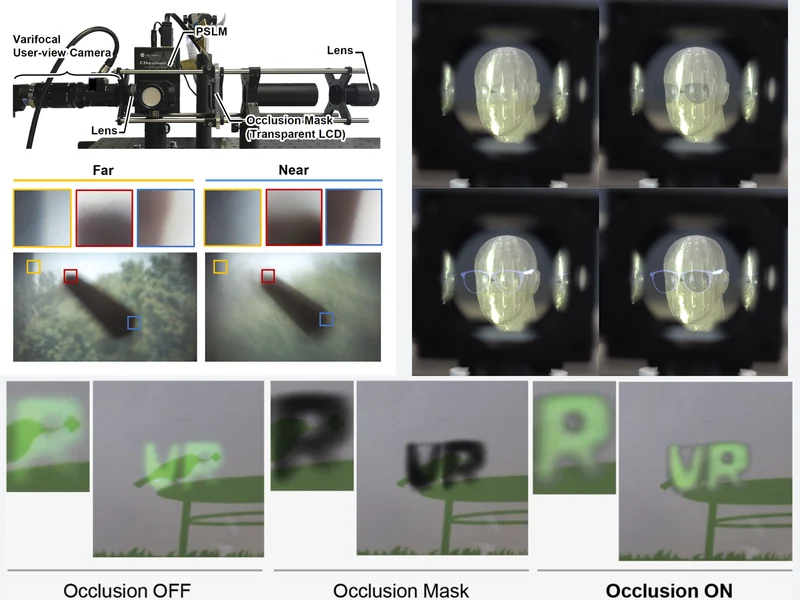
Occlusion-Capable Displays
We study optical see-through displays that selectively block real-world light so virtual objects can appear in front of physical objects. The work addresses focus-dependent occlusion, responsive optical materials, and their effects on depth perception.
9 related publications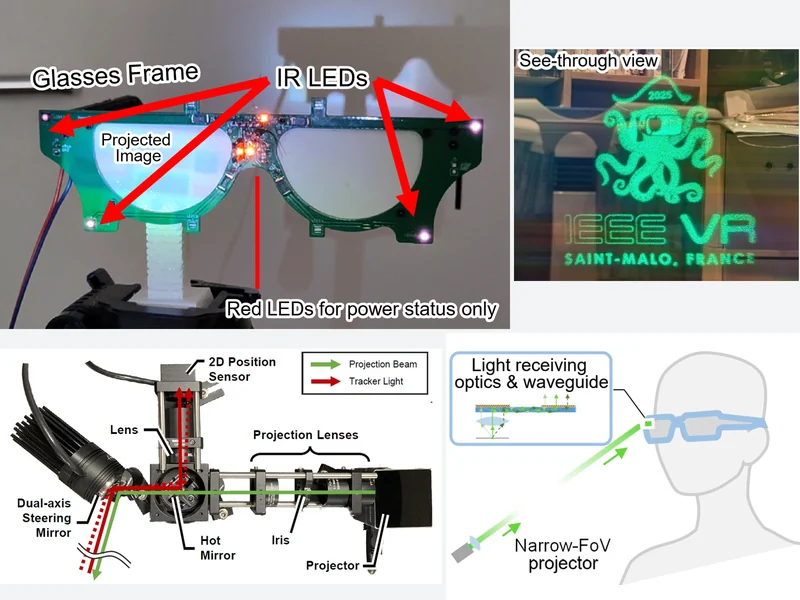
Beaming Displays
We study displays that place image projection in the environment to reduce the hardware worn on the head. Through high-speed tracking and projection, coordination between multiple projectors, and the design of thin waveguide optics, we explore image presentation that follows head movements.
7 related publications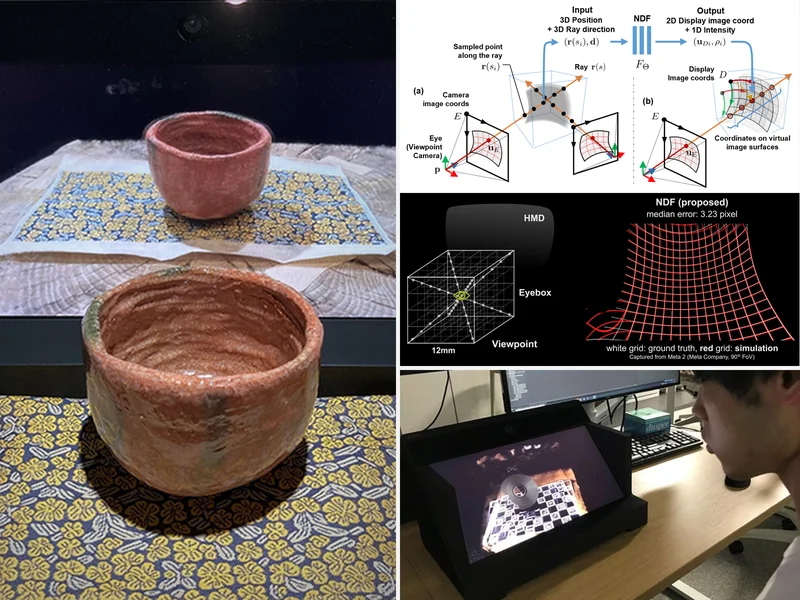
Neural Rendering + Displays
We bring advanced 3D representations into displays to expand the possibilities of visual experience. By modeling view-dependent appearance, we explore new ways to present material qualities and compensate for complex distortions in display optics.
3 related publicationsB. Augmenting Vision
Even the familiar world holds sights yet unseen. Guided by human perception, we explore what more it could mean to see.
Vision Augmentation
We explore how controlling light and imagery in ways informed by human vision can extend visual perception. The work supports brightness adaptation, uses the properties of eye movements to modulate visual experience, and improves contrast to help people see and find information.
9 related publications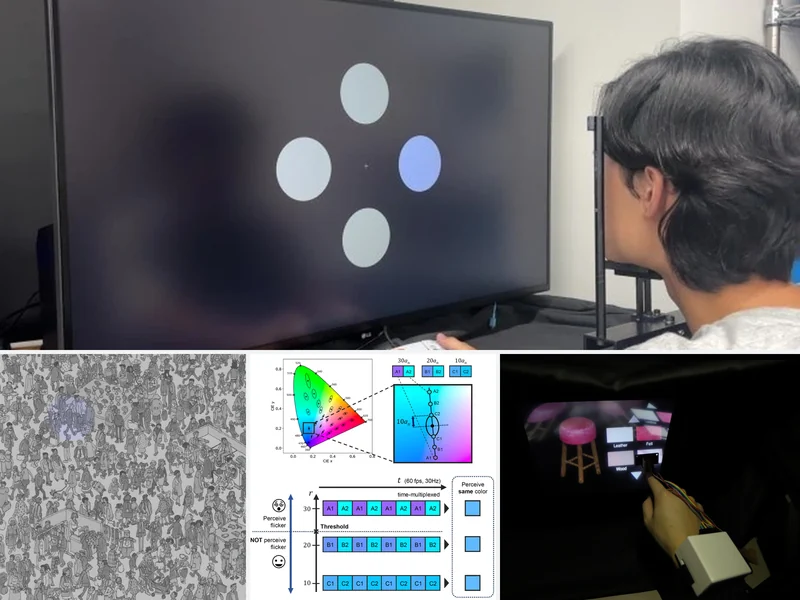
Imperceptible Color Vibration
We study rapid color alternation that appears as a stable color, examining how color pairs, modulation direction, and amplitude affect perception. We apply these findings to embedding information in visual content and guiding gaze.
4 related publicationsC. Connecting Imaginations
One person’s imagination can spark another’s creation. Where people and AI meet, experiences can emerge that no one could have imagined alone.
AI Agents in Social VR & Field Studies
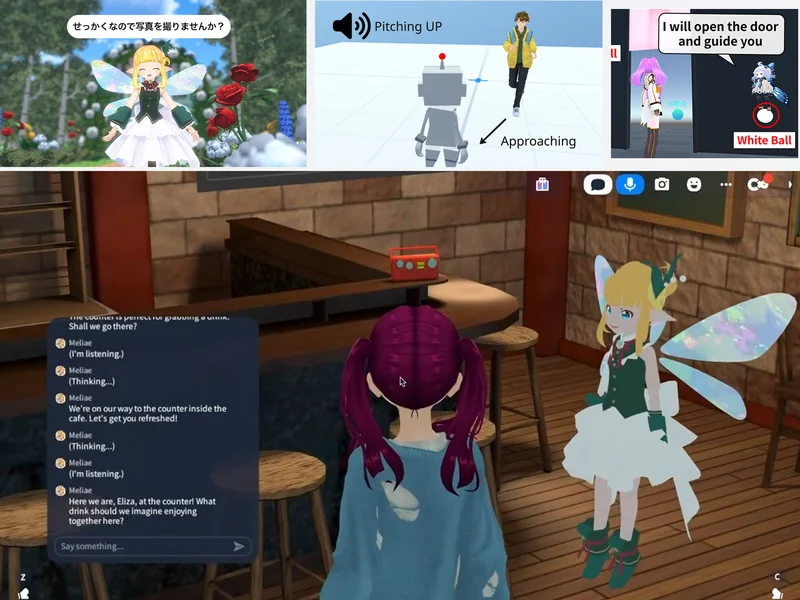
We develop embodied AI agents that converse with people and act within shared virtual spaces. By deploying them in live social VR environments, we study how people respond, how their behavior changes, and how relationships with agents develop over time.
5 related publications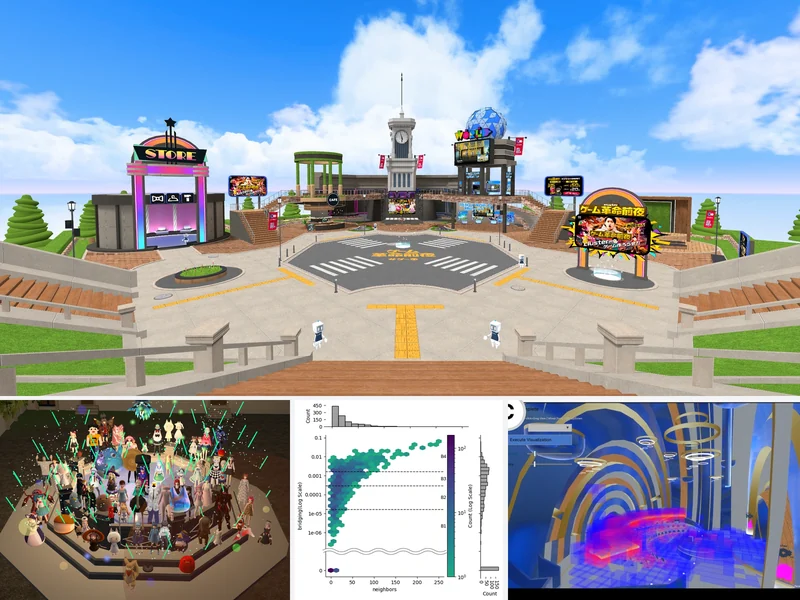
Social VR Community Analysis
We analyze behavioral logs to understand how people gather, interact, and form communities in social VR. Analysis and visualization tools help reveal these patterns and examine how virtual experiences relate to users’ interests, values and preferences, and intentions to act in the physical world.
3 related publications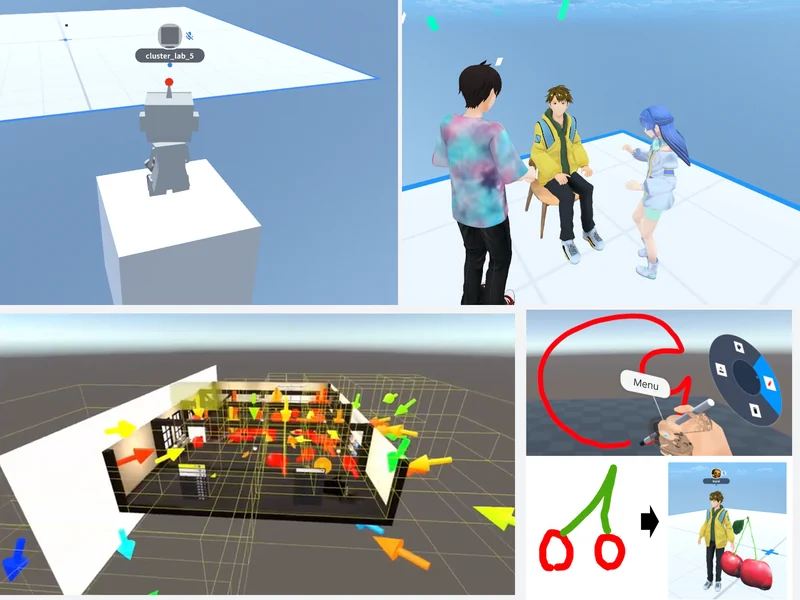
VR Creation Tools
We build tools that turn language and sketches into objects and behaviors in virtual spaces. The work also supports spatial authoring and connections to physical devices, lowering technical barriers to creating interactive experiences.
7 related publications